
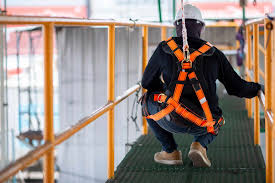
Fitness matters when someone works at height, but the Work at Height Regulations 2005 do not prescribe a medical examination or medical certificate for every worker. Employers must assess the actual work and ensure people can carry it out safely. This guide explains when occupational health advice may be needed, how role-specific assessments differ from general health screening, and how to handle fitness advice and review dates responsibly.
Understanding working at height medical requirements
A working at height medical is a fitness-for-work assessment tailored to a person’s duties. It may be required by the risk assessment or an applicable industry or client scheme. There is no universal statutory working-at-height medical for everyone who uses a ladder, scaffold or platform.
The starting point is the job: its physical demands, access arrangements, equipment, environment and rescue needs. Employers should use competent occupational health advice where a health condition or the demands of a safety-critical role raise questions about fitness. Medical assessment supports safe work arrangements; it does not replace fall prevention.
What counts as working at height? It is work where a fall to a lower level could cause injury, including falls into holes or through fragile roofs. There is no general minimum height. HSE excludes slips and trips on the same level and normal use of a permanent staircase in a building from this definition.
Why fitness advice matters. Health symptoms or treatment effects may affect a particular task. Assess the individual’s functional abilities and the controls available, rather than treating a diagnosis as an automatic ban. Occupational health can advise on adjustments, temporary restrictions or alternative duties while the employer manages the work safely.
Who needs an assessment? Decide from the role and its risks, relevant medical advice and any applicable scheme requirements. A tower climber and a worker using a small stepladder may need different arrangements. A change affecting safe performance, or a return after illness, can justify a review; age alone does not create a fixed medical interval under the height regulations.
Legal and regulatory framework
This guide describes the Work at Height Regulations 2005 in Great Britain. Northern Ireland has separate Work at Height Regulations (Northern Ireland) 2005. Fitness decisions also sit within wider health and safety, equality and data protection duties.
Work at Height Regulations 2005 overview. The regulations require risk assessment, suitable planning, supervision, competent people and appropriate equipment. They do not set a standard medical test battery, annual examination or national fitness certificate. Any assessment should address the worker’s actual role and the risk assessment.
Wider health and safety legislation. Employers must protect workers and others affected by their activities. HSE or the relevant local authority enforces workplace health and safety in Great Britain, depending on the activity. Fitness checks must be proportionate, with health information handled confidentially and equality duties considered.
Other relevant legislation works alongside these rules to set minimum requirements for risk assessment, training and equipment provision:
- Management of Health and Safety at Work Regulations 1999
- Construction (Design and Management) Regulations 2015
- Personal Protective Equipment at Work Regulations 1992, as amended, including the 2022 extension of duties to relevant workers
Employer and employee responsibilities. Employers should explain the relevant job demands, seek appropriate advice where needed and put agreed restrictions or adjustments into practice. Workers should follow safe systems and raise concerns about their ability to work safely through an appropriate confidential route. A client’s medical-certification rule may apply to a particular site, but it should not be described as a universal requirement of the height regulations.
What is involved in a working at height medical assessment
An assessment should answer a clear question about fitness for specified duties. The clinician decides what information or examination is necessary; the title “working at height medical” does not imply that every worker needs the same tests.
General health checks. Give the occupational health professional an accurate description of the work and its hazards. An assessment may begin with a relevant health questionnaire and discussion. Useful information to supply includes:
- The tasks, access routes and equipment the person will use
- Climbing, movement and other physical demands of the role
- The working environment, shifts and expected duration of tasks
- Relevant symptoms or treatment effects, discussed confidentially with the clinician
- The proposed controls, adjustments and emergency arrangements
Vision and hearing. Consider what a worker needs to see and hear for the actual task, including communication and warning systems. The clinician can decide whether particular tests are relevant. A hearing test is not a general test of balance, and there is no universal vision or hearing pass mark in the height regulations.
Movement and balance. Access, equipment use and rescue arrangements may place demands on movement or balance. Where these raise concerns, obtain individual advice and consider changes to the task or equipment. Avoid blanket exclusions based solely on a previous injury or a disability.
Medical history and treatment. Relevant symptoms, previous episodes affecting safe performance and possible medicine side effects can inform the assessment. Workers should discuss clinical questions with a healthcare professional and should not stop prescribed treatment to meet a job requirement. The employer normally needs advice about fitness and adjustments, rather than a full medical history.
Role of occupational health in working at height
Occupational health professionals help interpret health information in the context of work. Their advice can support decisions about safe duties, adjustments and review, while the employer remains responsible for managing workplace risks.
The assessment process. Explain the purpose to the worker and provide the clinician with the role description and risk assessment. Any examination or testing should be relevant and proportionate. Blood tests, urine tests, lung-function tests and mental health questionnaires are not a compulsory standard package under the Work at Height Regulations.
Services for employers. Occupational health can advise on fitness questions and returning to work. Statutory health surveillance is a separate requirement for certain workplace health risks, such as some hazardous-substance or noise exposures; it is not an automatic annual medical for all height workers. Avoid using general health screening as a substitute for controlling hazards.
Fitness reports and certificates. Where a scheme requires a certificate, check its scope and rules. A clinician’s report may recommend suitable duties, restrictions and a review date. The height regulations do not give all certificates a 12-month validity or require six-monthly reviews for higher-risk roles. Consider reasonable adjustments and further advice before making employment decisions.
Ensuring ongoing health and safety compliance
Keep the risk assessment and any agreed fitness arrangements effective as the work or the individual’s circumstances change. Review dates should reflect the advice and requirements that actually apply to the role.
Frequency of assessments. There is no universal annual schedule, special over-40 rule or six-month interval in the height regulations. Follow relevant scheme requirements and competent clinical advice. Review sooner when a change could affect safe performance, rather than assuming an earlier certificate guarantees fitness until its expiry date.
Record-keeping and confidentiality. Retain only the health information needed for the stated purpose, restrict access and use a justified retention schedule. Managers usually need fitness advice, restrictions and review dates, not detailed clinical records. There is no general three-year retention rule or requirement to display medical certificates on site under the height regulations. Separate exposure-specific health-record duties may apply.
Addressing health changes and incidents. Give workers a confidential way to raise concerns, including symptoms or treatment effects that could affect safe work. Review duties and seek clinical advice when necessary. Following an injury, follow emergency and first-aid arrangements; after a near miss, investigate the work and controls, with a medical referral where the circumstances justify it.
Industry-specific considerations and best practices
Different industries present unique challenges for working at height medical assessments. Requirements vary based on the specific role, the environment and the level of risk exposure.
High-risk roles and environments. Climbing, remote locations, difficult access and rescue constraints may make fitness advice particularly relevant. Provide the clinician with those demands instead of selecting tests from a generic industry checklist. Separate offshore, transport or client schemes may impose additional requirements; check the exact scheme before assigning work.
| Industry | Examples of job demands to assess | Basis for review |
|---|---|---|
| Construction | Access, climbing, equipment use and rescue | Role, risk assessment and relevant advice |
| Telecommunications | Mast access, work position and rescue arrangements | Applicable scheme and relevant advice |
| Utilities | Access demands and the specific work environment | Role, risk assessment and relevant advice |
| Maintenance | Equipment access, posture and emergency arrangements | Role, changes in duties and relevant advice |
Other role-specific requirements. A job title alone does not establish a medical standard. Confirm any industry or client requirement and distinguish it from the general law. Clinical decisions should consider the person, the work and possible adjustments, rather than assuming all roofers, engineers or tower climbers need an identical examination.
Integration with wider safety arrangements. Put relevant fitness restrictions into work planning without sharing unnecessary health details. Check that the person can use the selected equipment and take part in the emergency arrangements. Medical advice, suitable access equipment, competent supervision and effective fall prevention all contribute to safe work; none replaces the others.
Sources & references
- HSE — Work at height: the law; Work at Height Regulations 2005, as amended (Great Britain); HSENI — Working at height and Northern Ireland legislation
- HSE — Occupational health and fitness for work; Acas — Getting a doctor’s report about a worker’s health
- ICO — Medical examinations and testing at work
- ICO — Protecting workers’ health information
- HSE — When health surveillance is required; HSE — Personal protective equipment at work (L25)
- HSE — Definitions, guardrails, ladders and competence; HSE — Risk assessment, recording and review
Make sure everyone who works at height understands the risks and the rules.
Train your team to work safely at height →
Mark writes about working at height safety, compliance and accredited training for Working at Heights Course, part of Online CPD Academy.